The Anti-Inflammatory Diet: A Nutritional Therapist Guide
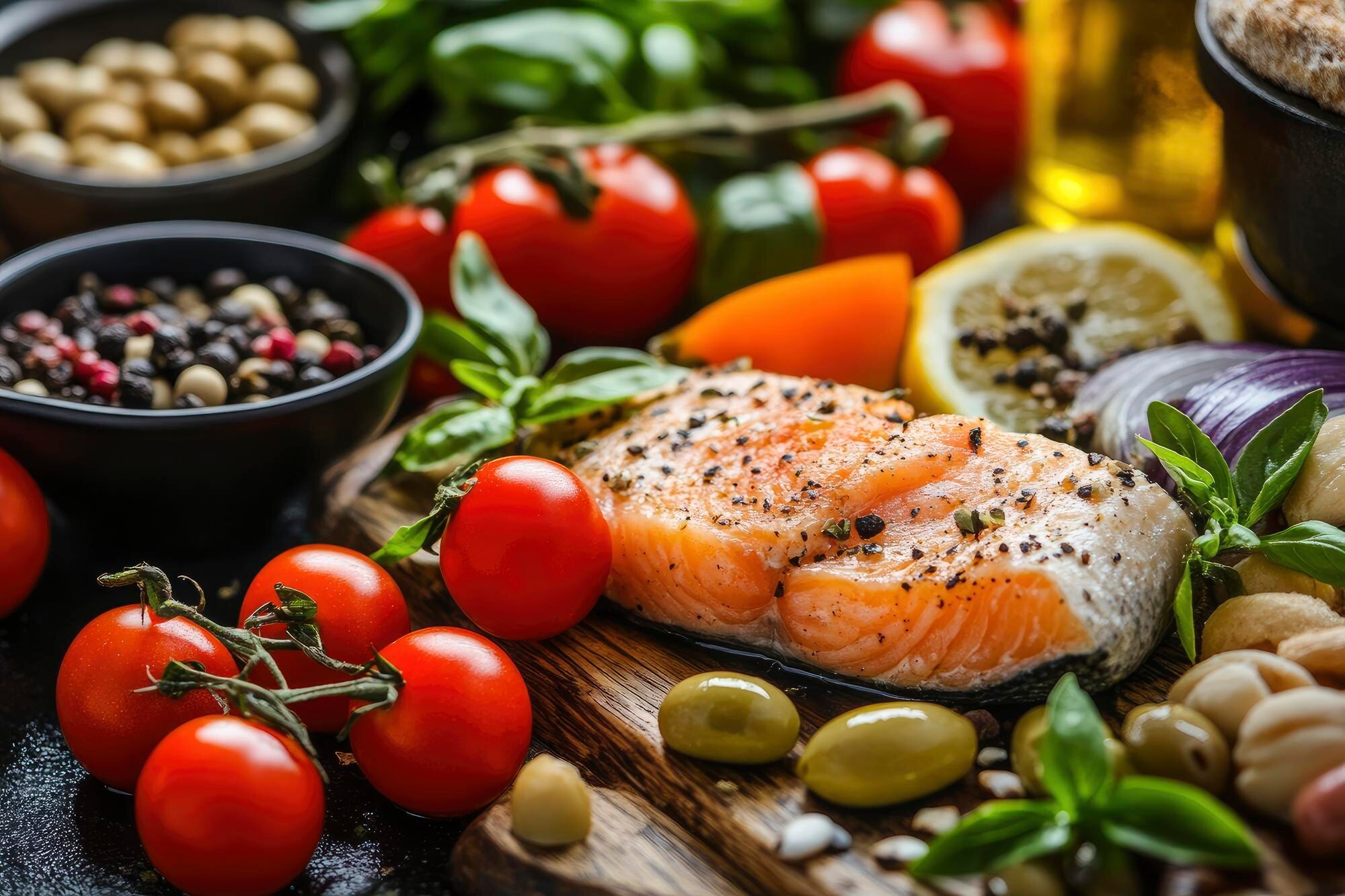
An anti-inflammatory diet is not a single prescribed plan but a way of eating — most closely resembling the Mediterranean pattern — that emphasises whole, minimally processed foods rich in fibre, plant antioxidants, and unsaturated fats, while limiting ultra-processed foods, refined sugar, and excess saturated fat. Current evidence suggests this pattern may help support healthier levels of inflammatory markers such as C-reactive protein (CRP) as part of an overall healthy lifestyle.
Key takeaways
- Chronic low-grade inflammation is associated with a range of long-term health conditions; diet is one of the modifiable factors that may influence it.
- The Mediterranean dietary pattern has the strongest and most consistent evidence of any eating pattern for supporting lower inflammatory markers, including CRP and IL-6.
- No single food is anti-inflammatory on its own — the overall pattern of eating matters far more than any individual ingredient.
- Oily fish, extra-virgin olive oil, colourful vegetables and fruit, wholegrains, legumes, nuts, seeds, and fermented foods are most consistently associated with lower inflammatory marker levels.
- Ultra-processed foods, excess refined sugar, high intakes of processed meat, and excess saturated fat are associated with higher inflammatory markers in research.
- Lifestyle factors — including physical activity, sleep quality, not smoking, and maintaining a healthy weight — work alongside dietary changes and are equally important.
What is inflammation — and when does it become a problem?
Inflammation is your immune system’s essential first response to injury, infection, or threat. Acute inflammation — the redness, heat, and swelling after a cut or infection — is protective, time-limited, and resolves once the threat passes. The concern, from a nutritional standpoint, lies with chronic low-grade inflammation: a persistent, low-level activation of the immune system that can continue for months or years without obvious symptoms.
Chronic low-grade inflammation is associated with a range of long-term health conditions including cardiovascular disease, type 2 diabetes, some cancers, and autoimmune conditions. Researchers measure it using blood biomarkers such as high-sensitivity C-reactive protein (hs-CRP), interleukin-6 (IL-6), and tumour necrosis factor-alpha (TNF-alpha) — proteins produced when the immune system is in an activated state. In everyday terms, these are simply signals that the body’s background “alert level” is higher than optimal.
Common drivers of chronic inflammation include excess body fat (particularly visceral fat stored around the abdomen), smoking, poor or disrupted sleep, physical inactivity, chronic psychological stress, and dietary patterns dominated by ultra-processed foods. Diet is just one piece of the puzzle — but it is one of the most modifiable.
What does an anti-inflammatory diet actually involve?
The “anti-inflammatory diet” is not a trademarked programme or rigid meal plan. It describes a pattern of eating — and the pattern most closely backed by current evidence is the Mediterranean diet. It is worth noting that in the UK, the term “anti-inflammatory” is not an authorised health claim, meaning no food can legally carry it on a label; this signals the regulatory environment and underscores the importance of framing all claims accurately.
The Mediterranean pattern is characterised by:
- Abundant vegetables (a wide variety of colours), fruit, legumes (beans, lentils, chickpeas), wholegrains, nuts, and seeds
- Extra-virgin olive oil as the primary cooking and dressing fat
- At least two portions of oily fish per week (mackerel, sardines, salmon, herring, fresh tuna)
- Moderate amounts of poultry, eggs, and fermented dairy (live yoghurt, cheese)
- Limited red and processed meat, minimal ultra-processed snack foods and sugary drinks
The British Dietetic Association (BDA) describes the Mediterranean diet as “one of the best-studied diets in scientific literature,” with robust evidence for associations with better cardiovascular outcomes and reduced risk of type 2 diabetes. This pattern also closely aligns with the NHS Eatwell Guide: eat at least five portions of fruit and vegetables daily, base meals on wholegrain starchy foods, include at least one portion of oily fish per week, and choose unsaturated oils.
What does the research say about diet and inflammatory markers?
Evidence linking dietary patterns to inflammatory biomarkers has strengthened considerably in recent years — though it is important to read it carefully.
A 2024/2025 systematic review and meta-analysis of 33 randomised controlled trials (3,476 participants) found that the Mediterranean diet produced significant reductions in hs-CRP and IL-6 compared to control diets, with the strongest effects seen in participants under 60 and in shorter-duration interventions (PubMed PMID: 41211687). A major 2026 umbrella review published in Nutrition Reviews (Reyneke, Lambert & Beck, 2026; 84(6):1167–1192) examined 30 systematic reviews covering 225 primary studies and 15 dietary patterns. The Mediterranean diet had the most evidence — appearing across 16 of the 30 reviews — and demonstrated “significant effects and overall beneficial association” with reductions in CRP, IL-6, and higher levels of adiponectin (an anti-inflammatory protein). Certainty of evidence ranged from low to high across outcomes.
The Dietary Inflammatory Index (DII) — a validated scoring tool based on 45 dietary components and their association with six inflammatory biomarkers — has been applied in over 200 human studies. A higher (more pro-inflammatory) DII score is consistently associated with elevated hs-CRP, TNF-alpha, and IL-6; a Mediterranean-type eating pattern consistently produces a negative (anti-inflammatory) DII score.
One important caution from the British Heart Foundation: “Most studies have been conducted in labs using concentrated extracts, so it’s unclear if these individual foods alone can prevent or cause inflammation.” The pattern of eating matters more than any single food or supplement.
Which foods are most associated with lower inflammatory markers?
The following food groups appear most consistently in research associated with lower levels of inflammatory markers. No single food should be viewed in isolation — variety and overall dietary pattern are what the evidence supports.
- Oily fish (mackerel, sardines, salmon, herring, fresh tuna): rich in long-chain omega-3 fatty acids (EPA and DHA). An umbrella meta-analysis in Clinical Nutrition (2022) found omega-3 supplementation significantly reduced serum CRP, TNF-alpha, and IL-6. The BDA recommends two 140g portions of oily fish per week for those with rheumatoid arthritis; the NHS Eatwell Guide recommends at least one oily fish portion weekly for the general population.
- Extra-virgin olive oil: the primary fat in the Mediterranean pattern, providing oleic acid and oleocanthal — a phenolic compound that in laboratory research has shown similar mechanisms to anti-inflammatory agents. It is important to note that these are laboratory findings; consuming olive oil is not equivalent to taking medication.
- Colourful vegetables and fruit: provide polyphenols, carotenoids (lycopene, beta-carotene), flavonoids, and vitamin C — plant compounds associated with antioxidant activity. Each colour group provides different phytonutrients; variety matters. The NHS recommends at least five portions daily.
- Wholegrains (oats, brown rice, wholemeal bread, barley): provide soluble and insoluble fibre that feeds beneficial gut bacteria, which produce short-chain fatty acids (SCFAs), particularly butyrate — associated with supporting gut barrier integrity and modulating immune signalling.
- Legumes (lentils, chickpeas, kidney beans): excellent sources of fibre and plant protein, associated with improved glycaemic response and support for gut microbiome diversity.
- Nuts and seeds (walnuts, flaxseed, chia seeds, almonds): walnuts are particularly rich in plant-derived ALA omega-3. Almonds and other nuts provide vitamin E and unsaturated fats.
- Fermented foods (live yoghurt, kefir, kimchi, sauerkraut, kombucha): a 2021 randomised controlled trial from Stanford University (Wastyk et al., Cell) found that a high-fermented-food diet increased microbiome diversity and reduced levels of several inflammatory proteins. This is a promising finding that warrants further research, and is best framed as part of a broader dietary pattern rather than a standalone intervention.
- Herbs and spices: turmeric contains curcumin, a compound with antioxidant properties studied for its potential effects on inflammatory pathways. However, evidence in humans from dietary amounts of turmeric is limited — most studies use concentrated supplements. Curcumin’s bioavailability from food is low (combining turmeric with black pepper may modestly increase absorption). Ginger, rosemary, and other herbs contain polyphenols with antioxidant properties. Use these as flavourful additions to your cooking rather than viewing them as medicinal doses.

Which foods are associated with higher inflammatory markers?
Just as important as what to include is understanding which food patterns research associates with higher levels of inflammatory markers.
- Ultra-processed foods (UPFs): defined by the NOVA classification as industrially formulated products containing multiple additives. Broader evidence, including large UK Biobank and US NHANES cohort data, associates high UPF consumption with elevated CRP. It is the overall UPF dietary pattern, rather than any single additive in isolation, that is associated with these effects.
- Refined carbohydrates and added sugars: associated with glycaemic spikes, raised triglycerides, and elevated inflammatory markers in epidemiological studies.
- Processed and red meat in high quantities: the BDA notes that bacon, sausages, and salami are high in saturated fat and salt, associated with raised cholesterol and blood pressure. The BDA’s rheumatoid arthritis dietary guidance also notes that salt intake above 6g/day “may promote inflammation due to changes in the immune system.”
- Excess saturated fat: high intake is associated with pro-inflammatory signalling in adipose tissue.
- Sugary drinks and excess alcohol: associated with raised triglycerides and disruption to gut microbiome balance.
The gut microbiome and inflammation: what’s the connection?
One of the most active areas of nutritional research concerns the gut microbiome — the trillions of bacteria, fungi, and other microorganisms living in your digestive tract — and its relationship with immune function and inflammation.
Dietary fibre from a variety of plant sources feeds beneficial gut bacteria, which ferment that fibre into short-chain fatty acids (SCFAs), particularly butyrate. Butyrate supports the health of the cells lining the gut wall (colonocytes), is associated with maintaining intestinal barrier integrity, and may help modulate local and systemic immune responses — reducing the signals that drive low-grade inflammation. A diverse, plant-rich diet is associated with greater gut microbiome diversity, which in turn is associated with healthier immune function.
This is one reason why the variety of plants in your diet matters as much as the quantity. Aiming for 30 or more different plant foods per week — vegetables, fruit, wholegrains, legumes, nuts, seeds, herbs, and spices — is a practical target that nutritional therapists commonly use to support gut diversity.
Practical swaps: moving towards an anti-inflammatory eating pattern
Sustainable dietary change works best through gradual, practical shifts rather than wholesale overhauls. Here are some straightforward swaps aligned with the evidence:
- White bread or white rice → wholegrain or sourdough bread / brown rice or barley
- Crisps or biscuits as a snack → a small handful of mixed nuts or seeds
- Processed deli meat in a sandwich → tinned sardines or mackerel pâté on wholemeal toast
- Sunflower oil for roasting → extra-virgin olive oil (lower heat) or cold-pressed rapeseed oil
- Full-fat sugary yoghurt → plain live yoghurt with fresh berries
- Sugary soft drink → water with lemon, herbal tea, or green tea
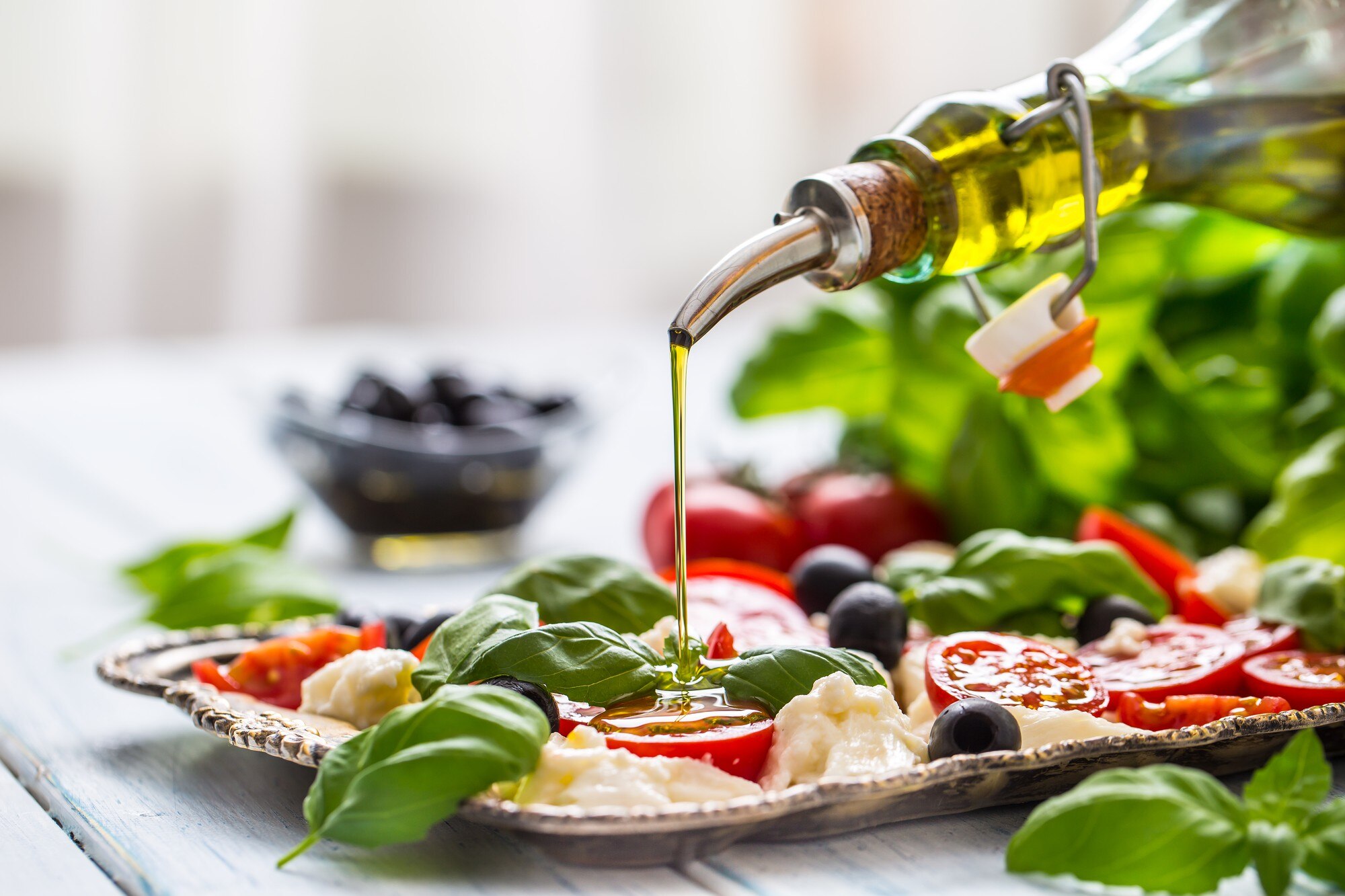
A sample day on an anti-inflammatory eating pattern:
- Breakfast: Overnight oats made with rolled oats, plain live yoghurt, blueberries, walnuts, and a pinch of cinnamon
- Mid-morning: Green tea and a small handful of almonds
- Lunch: Large salad with mixed leaves, roasted red peppers, chickpeas, cherry tomatoes, cucumber, and pumpkin seeds, dressed with extra-virgin olive oil and lemon; a slice of wholegrain bread
- Dinner: Baked salmon fillet with roasted Mediterranean vegetables (courgette, aubergine, red onion, tomatoes) and a portion of quinoa or brown rice; wilted spinach with garlic
- Pudding: Small bowl of mixed berries with a spoonful of kefir or live yoghurt

Lifestyle factors that work alongside diet
Diet does not exist in isolation. Research consistently shows that lifestyle factors work alongside — and are equally important to — dietary patterns when it comes to inflammatory marker levels.
The British Heart Foundation highlights that not smoking, staying physically active, and maintaining a healthy weight all contribute to lower inflammatory markers. Research from Loughborough University indicates that regular physical activity is independently associated with reduced immune-mediated chronic inflammation. Chronic psychological stress is also associated with elevated inflammatory markers — a reminder that a whole-person approach, addressing sleep, stress, movement, and diet together, is likely to be more effective than dietary changes alone.
For those interested in exploring dietary support for heart-health support or conditions involving skin inflammation such as those managed through skin & eczema support, addressing these lifestyle factors alongside nutritional changes forms a core part of any evidence-informed approach.
Nutritional therapist vs. dietitian: understanding the difference
Nutritional therapists are registered with the Complementary and Natural Healthcare Council (CNHC) and may be members of the British Association for Nutrition and Lifestyle Medicine (BANT). They work to support general health and wellbeing through personalised nutritional and lifestyle approaches.
A dietitian is a protected title, regulated by the Health and Care Professions Council (HCPC). Dietitians work within the NHS and private healthcare settings to provide evidence-based dietary therapy for diagnosed medical conditions. If you are living with a condition that involves inflammation, dietary approaches may be worth discussing with your GP and healthcare team, as part of your overall care. Your GP may also refer you to an NHS dietitian where appropriate.
References
- British Heart Foundation — Anti-inflammatory diet: what you need to know
- NHS — The Eatwell Guide
- British Dietetic Association — Rheumatoid Arthritis and Diet
- Reyneke GL, Lambert K, Beck EJ. Dietary Patterns Associated With Anti-inflammatory Effects: An Umbrella Review. Nutrition Reviews. 2026;84(6):1167–1192.
- Mediterranean Diet Reduces Inflammation in Adults: A Systematic Review and Meta-analysis of Randomized Controlled Trials (PubMed PMID: 41211687)
- British Dietetic Association — The Mediterranean diet is a healthy diet, but it is not the only way to eat healthily
This article is for general education and is not medical advice. Nutritional therapy supports general health and wellbeing; it is not a substitute for medical care, and we do not diagnose, treat, cure or prevent any disease. Always consult your GP about any medical concern. If you have a diagnosed health condition, are pregnant, or are taking prescribed medication, please consult your medical team before making significant changes to your diet. Nutritional therapists are registered with the CNHC and are not dietitians.